Revelation Order of the Qur'an


Revelation Order of the Qur'an


The Qur'an was sometimes revealed to respond to various events and incidents. Sometimes it was revealed to support the Prophet (saws) who was faced with many questions, whether by Muslims or non-Muslims, and hardships. Other times was revealed for legislation and for putting rules to govern the social, economical, and political life of Muslims.
The first verses to be revealed, according to the most correct opinion of scholars, are the first five verses of Surat Al-`Alaq, which happens to be Chapter 96 of the 114 chapters of the Qur'an.

Order of Verses
Muslim scholars agree that the order of the verses in every chapter was done or commanded by the Prophet (saws) himself following the commands of Almighty Allah.
The Prophet (saws) once told his Companions after he had received a certain revelation that the arch-angel Gabriel had specified for him the particular order of verses (Ahmad).
There are also many incidents narrated in the books of Sunnah regarding the Prophet's (saws) recitation during prayer. The Companions used to pray every day behind the Prophet (saws) and he used to recite the Qur'an in the order given to him by Allah, and they used to learn and memorize from his recitation.
There have never been any incident in which any of the Companions reciting in any order that violated the order of the verses showed to us by the Prophet (saws).

Order of Surahs
As for the order of the surahs (chapters), the most accepted view is that it was also applied following an instruction given by Almighty Allah. It has been recorded that the Prophet (saws) reviewed the Qur'an with the arch-angel Gabriel 24 times all within his life.
Every year, he used to review it once during the month of Ramadan with Gabriel. During the final year of the Prophet's life, Gabriel revised the Qur'an twice with the Prophet (saws) as a way of confirming it. The Prophet (saws), in turn, used to follow this order in teaching his Companions and communicating the message to them.

Significance of Order
The question of why a surah like Surat Al-`Alaq, which was revealed first not put first in the mushaf (a physical copy of the Qur'an), this will require us to search more in the Qur'an and explore some of its secrets. A deeper look into the whole matter will show us that the order of the Qur'an has a purpose and the revelation of the Qur'an also has a purpose.
For instance, the revelation of the Qur'an responding to specific problems or incidents carries the purpose of solving these problems or providing guidance in these incidents.
During the first 13 years of Islam, the main task of the Prophet (saws) was to call people to Islam based on the Qur'anic revelations that focused on the Oneness of Allah and righteous conduct.
When Muslims migrated to Madinah and an Islamic community started to be well-established and new challenges emerged, the main focus of the revelation was to regulate the life of Muslims through detailing the rulings pertaining to different acts of worship and setting punishments for crimes and so on.
This shows us that the revelation in each of the two stages has a purpose. When the revelation stage was completed, the whole Qur'an was there and the whole message was put in the order that was intended for it to stay till the Day of Judgment.

Explanation of Order
Such an order serves in delivering the message the Qur'an is put for, as it has got another purpose.
If you look at the first surah of the Qur'an, namely Al-Fatihah, you can perceive that it acts as a summary for the structure and the message of the Book (Qur'an) ahead of every reader.
Being Umm Al-Qur'an (the Mother of the Qur'an), it carries all its themes; it summarizes them. It tells us who Allah is: the source of all love and mercy. Therefore, knowing who He is, we should be thankful to Him and worship Him alone. We should seek His help, and He has all the power to give us whatever we need. It makes it clear that Allah is the only One Who can really guide. It speaks about life after death and the consequences of human action and behavior.
The same holds true for Surat Al-Baqarah. The first verses speak about the fact that this Book is above all doubts and it is beyond the abilities of doubters to try to challenge its validity. Then it gives a hint on its main theme — guiding the righteous — and then goes on to speak about the beginning of creation and the story of Adam to establish the theme that humankind is here on earth as a vicegerent of the Creator and should use the Book as a manual to carry out the mission in the right way.
All these themes and messages cannot be carried except through this logical order in which Allah commanded for the Qur'an to be put. If a surah like Al-`Alaq was to be put at the beginning instead of Al-Fatihah, it could have given a significance of course and give a message, but not the exact fully wonderful message that we can get from the order of the Qur'an as it is now.

Why Al-`Alaq in the Current Order?
As for why Surat Al-`Alaq is mentioned in this specific order in the Qur'an, scholars hold the view that in the previous surah of At-Tin, Allah says what means that He has created humans in the best make (At-Tin 95:4). The details of that creation are cited in Surat Al-`Alaq:
*{Read in the name of your Lord Who created. Created humans, out of a (mere) clot of congealed blood.}* (Al-`Alaq 96:1-2)

Revelation Order of the Qur'an


Revelation
Order
Surah Number
Surah Name Arabic Name Total Verses Revelation Place
1 96 Alaq 19 Macca
2 68 Qalam 52 Macca
3 73 Muzammil 20 Macca
4 74 Mudathir 56 Macca
5 1 Fatehah 7 Macca
6 111 Lahab 5 Macca
7 81 Takwir 29 Macca
8 87 A'la 19 Macca
9 92 Leyl 21 Macca
10 89 Fajr 30 Macca
11 93 Duha 11 Macca
12 94 Inshira 8 Macca
13 103 Asr 3 Macca
14 100 Aadiyat 11 Macca
15 108 Kauthar 3 Macca
16 102 Takatur 8 Macca
17 107 Alma'un 7 Macca
18 109 Kafirun 6 Macca
19 105 Fil 5 Macca
20 113 Falaq 5 Macca
21 114 Nas 6 Macca
22 112 Iklas 4 Macca
23 53 Najm 62 Macca
24 80 Abasa 42 Macca
25 97 Qadr 5 Macca
26 91 Shams 15 Macca
27 85 Buruj 22 Macca
28 95 T'in 8 Macca
29 106 Qureysh 4 Macca
30 101 Qariah 11 Macca
31 75 Qiyamah 40 Macca
32 104 Humazah 9 Macca
33 77 Mursalat 50 Macca
34 50 Q'af 45 Macca
35 90 Balad 20 Macca
36 86 Tariq 17 Macca
37 54 Qamr 55 Macca
38 38 Sad 88 Macca
39 7 A'Raf 206 Macca
40 72 Jinn 28 Macca
41 36 Ya'sin 83 Macca
42 25 Furqan 77 Macca
43 35 Fatir 45 Macca
44 19 Maryam 98 Macca
45 20 Ta Ha 135 Macca
46 56 Waqiah 96 Macca
47 26 Shuara 227 Macca
48 27 Naml 93 Macca
49 28 Qasas 88 Macca
50 17 Bani Israil 111 Macca
51 10 Yunus 109 Macca
52 11 Hud 123 Macca
53 12 Yousuf 111 Macca
54 15 Hijr 99 Macca
55 6 Anam 165 Macca
56 37 Saffat 182 Macca
57 31 Luqman 34 Macca
58 34 Saba 54 Macca
59 39 Zumar 75 Macca
60 40 Mumin 85 Macca
61 41 Hamim Sajdah 54 Macca
62 42 Shura 53 Macca
63 43 Zukhruf 89 Macca
64 44 Dukhan 59 Macca
65 45 Jathiyah 37 Macca
66 46 Ahqaf 35 Macca
67 51 Dhariyat 60 Macca
68 88 Ghashiya 26 Madina
69 18 Kahf 110 Macca
70 16 Nahl 128 Macca
71 71 Noah 28 Macca
72 14 Ibrahim 52 Macca
73 21 Anbiya 112 Macca
74 23 Muminun 118 Macca
75 32 Sajdah 30 Macca
76 52 Tur 49 Macca
77 67 Mulk 30 Macca
78 69 Haqqah 52 Macca
79 70 Maarij 44 Macca
80 78 Naba 40 Macca
81 79 Naziat 46 Macca
82 82 Infitar 19 Macca
83 84 Inshiqaq 25 Macca
84 30 Rum 60 Macca
85 29 Ankabut 85 Macca
86 83 Tatfif 36 Macca
87 2 Baqarah 286 Madina
88 8 Anfal 75 Madina
89 3 Aal-e-Imran 200 Madina
90 33 Ahzab 73 Madina
91 60 Mumtahana 13 Madina
92 4 Nisa 176 Madina
93 99 Zilzal 8 Macca
94 57 Hadid 29 Madina
95 47 Muhammad 38 Madina
96 13 Ra'd 43 Madina
97 55 Rahman 78 Macca
98 76 Dahr 31 Madina
99 65 Talaq 12 Madina
100 98 Beyinnah 8 Madina
101 59 Hashr 24 Madina
102 24 Nur 64 Madina
103 22 Hajj 78 Madina
104 63 Munafiqun 11 Madina
105 58 Mujadila 22 Madina
106 49 Hujurat 18 Madina
107 66 Tahrim 12 Madina
108 64 Taghabun 18 Madina
109 61 Saff 14 Madina
110 62 Jumah 11 Madina
111 48 Fath 29 Madina
112 5 Maidah 120 Madina
113 9 Taubah 129 Madina
114 110 Nasr 3 Madina


FAQs about Nutrition during Ramadan


What is the best food to start my Iftar with?
It is best to start the Iftar meal with 3 dates and a cup of warm low fat soup (such as, vegetable or grain soup) before going to prayer. You may also have a cup of low fat butter milk, but make sure that it is not chilled (chilled drinks do not support your stomach to digest food properly). After prayer you should continue with the main Iftar meal. This approach helps your body adjust to eating again after the long hours of fasting.


Could I delay my Iftar meal to after Magrib prayer?
Yes, you can delay your Iftar meal until after the prayer, but it is better to break your fast by eating 3 dates with a cup of low fat laban (not very cold) or a cup of warm low fat soup.

Do not delay your Iftar meal more than an hour after the sunset. Delaying your Iftar meal for many hours is not recommended as it may cause your blood sugar drop.
 

Why do I feel sleepy after eating my Iftar meal?
Many people feel sleepy after consuming their Iftar meals. This is due to:

  • Consuming large amount of food and beverages in a short period of time without alerting their digestive system.
  • Consuming heavy and fatty meals.
  • Sleeping after Iftar meal is not recommended, as the digestion will not go well once the person is at sleep. It is better to delay the sleep after consuming the Iftar meal by 2-3 hours.
To avoid it:
  • Take 3 pieces of dates and a cup of warm low fat soup and pray.
  • Then you could have your Iftar meal considering:
    • Do not consume a lot of food at one time.
    • Chew your food well.
    • Make your meal low fat (avoid fried food and use lean meat or skinless chicken or baked fish) and if you wish to eat samboosa; eat it baked, not fried.
    • Do not overstuff yourself.
Drink fluids between the Iftar & Sahoor meals; not with or immediately after the Iftar meal. Walk for 30 min after your meal. Wait for 2 hours before you practice walking.
Can I drink lemon juice at Iftar meal? 
Lemon juice is very acidic and may be cold and sweetened. Therefore, it is not recommended to start your Iftar meal with it.
Start your Iftar meal with 3 dates with a cup of low fat soup or a cup of low fat laban (not very cold). However, you can drink lemon juice between the Iftar & Sahoor meals.
How many calories in one piece of samboosa?
There are 250 calories in one piece of fried samboosa and 125 in a baked one.

  • It better to use lean meat for samboosa or to have it filled with vegetables, or low fat cheese, or lentils.
  • Bake it, do not fry it.
  • Take only 1-2 pieces.
  • Two pieces of fried samboosas contain 15 grams of oil more than the baked ones.
What is the best timing for Sahoor meal and what should I eat at Sahoor?
Sahoor meal should include more of slow digesting food which lasts for many hours and help reduce the hunger feeling (the above listed food are slow digesting)

  • The best time for Sahoor meal is as close to Fajer as possible. (around 3:30 -4:00 AM), and it is better not to consume it at midnight or at 1:00 AM.
  • Sahoor meal should not be heavy, as most of the people tend to go back to sleep after consuming it.
  • The best food for Sahoor meal is
    • A cup of low fat milk or laban or yogurt
    • 2 slices of whole wheat bread or 1 cup of oat meal
    • Low fat labnah or low fat cheese or peanut better
    • Fresh fruit or unsweetened fruit juice or dried fruit
    • A cup of cooked lentils or beans
What is the best timing for exercise in Ramadan and what do you recommend?
The best time for exercise is in the evening (2 hours after Iftar meal).

  • 30-45 minutes of brisk walking or swimming are very good options.
  • You also can go to the exercise room, if you wish.
  • Make your exercise a fun and daily habit. Do it with a friend or a family member.
What I should eat at Iftar meal?

Your Iftar meal should be well-balanced and nutritious, and better to be low fat.
Meal’s Contents

  • 3 pieces of dates
  • 1 cup of low fat soup (vegetables on grains) or 1 cup of low fat laban.
  • One cup of steamed rice or pasta.
  • One cup of salad.
  • One cup of cooked vegetables.
  • One portion of lean meat (150 gram cooked) or ¼ chicken without skin, or baked fish (150 gram cooked).
  • 1-2 baked samboosas.
  • You can have fruits, vegetables, and low fat yogurt or laban, as a snack.
  • Remember to drink a lot of fluids (especially water) between Iftar and Sahoor meals.
How to reduce my body weight during Ramadan?

To reduce your body weight, you should practice regular exercise (such as 30-45 min of brisk walking or swimming) and follow a healthy low fat meal plan. Please refer to the Nutritional Tips to Avoid Weight Gain During Ramadan.

I have high cholesterol level. What food should I avoid?
  • Avoid commercial samboosas. You can prepare it at home. (choose vegetable samboosa, lentils or low fat cheese or labnah samboosas) and bake them using a little no stick spray.
  • Do not add butter or ghee on the top of Harees or Jareesh or to the food.
  • Use very lean meat or skinless chicken to prepare Harees.
  • Use skimmed milk or butter milk or yogurt in your meals
  • Do not use egg yolk or organ meat (liver, kidney, heart, brain).
  • Replace sweets with fresh fruits.
  • Replace Gishda (heavy cream) with non-fat labnah
  • Increase your intake of salads, vegetables, and fresh fruit.
  • Avoid pancake and other eggs containing dishes.
  • Do not use palm oil, coconut oil, ghee, butter, or animal fat in food preparation.
  • You can use olive oil or canola oil or corn oil, but in moderation.
    Remember:
    Keep your body weight within the normal range and practice regular exercise, as advised.
How much water I should drink?
It is recommended to drink 8-10 cups between Iftar & Sahoor meals.

  • Do not over drink at Iftar meal, drink 1-2 cups every 2-3 hours
  • Other good fluids for the body are unsweetened juices (but limit it to one cup/day, as it provides calories), low fat or non-fat milk or butter milk, low fat soup, and Caffeine free diet drinks, or decaffeinated tea or coffee.
How many dates I could eat?
You can have 3-5 dates a day. But 3 pieces is better.
Each piece provides 20 kcal and contains one teaspoon of sugar. It is best to start your Iftar meal with dates.
What should I eat as a snack during the night?
You can eat the following:

  • One cup of non-fat or low fat milk or yogurt or buttermilk
  • One fresh fruit or 1 cup of unsweetened fruit juice
  • 2 slices of low fat cheese or 2 tablespoons of low fat labnah
  • 2 slices of whole wheat bread or one cup of oat meal
  • One cup of salads or vegetable
  • Diet drink is optional.
I have diabetes and I want to fast, what should I do?
First you should speak to your doctor, as he may adjust your medication. Some diabetic patients can fast safely, however, some are advised not to fast.
If your doctor cleared you to fast, you should do the following:

  • Divide your meals into 3 (Iftar, midnight, Sahoor).
  • Take healthy Iftar meal as:
    • 3 pieces of dates
    • 1 cup of low fat soup (such as vegetable)
    • 1 cup of low fat laban, yogurt or low fat milk
    • 2 choices of carbohydrates (one cup cooked rice or pasta or 2 pieces of boiled or baked potatoes or 2 slices of whole wheat bread)
    • One cup of cooked vegetable
    • One cup of salad, without salad dressing  You can squeeze lemon on it
    • One portion of lean meat (4 ounces cooked) or chicken without skin, or baked fish.
Remember:
  • Drink more water between Iftar & Sahoor meals
  • Check your blood sugar before Iftar and 2 hours after the meal and before Sahoor time. Report the blood sugar results to your doctor.
    * Refer to the web for "Diabetes Guidelines During Ramadan".
Can the children fast?
It is not recommended for small children to fast. But older children can fast for a few hours (from morning to noon time) to train them for future and to share the fasting values with their families. It is best for them to eat their Iftar & Sahoor meals with their families to get the social and spiritual values of the holy month.


Can the pregnant or lactating women fast?
Pregnant and lactating woman are not recommended to fast. If they want to do so, they should speak to their doctors.
If allowed:

  • They should consume adequate water & fluids between Iftar and Sahoor meals.
  • Have adequate rest at day time. Practice walking at night time.
  • Consume 3 meals (Iftar, midnight and Sahoor)
  • Ensure adequate nutrition and consume 4 cups of low fat milk or laban on yogurt per day to ensure adequate calcium intake.
    * One more time, they have to speak to their doctors, as fasting in Ramadan can cause low blood sugar which may result in harming their babies to be formed during pregnancy, and does not permit adequate milk supplies for breast feeding.
What is the best soup to be consumed during Ramadan?
The best soup is low fat.

Examples
  • Vegetables (onion, spinach, mixed vegetable, celery, tomatoes, asparagus, cauliflower, broccoli, peas, green beans).
  • Grains (wheat, rice, oat, barley, corn)
  • Legumes (lentils, beans)
  • Noodles or macaroni
  • Cream (made with skimmed milk)
  • Broth
  • Minestrone
    Note: You can mix a little chicken or beef or lamb meat with the soup and you can combine many ingredients, such as vegetables with legumes.
I have constipation, what should I do to have regular motion?
Many fasting people may suffer from constipation during Ramadan. To avoid it:

  • Consume adequate fluids (especially water 8-10 cups) between Iftar and Sahoor meals.
  • Include low fat soup in your meal.
  • Take decaffeinated drinks (coffee, tea, diet drink) between the meals.
  • Increase your fiber intake by:
    • Use whole wheat bread rather than white bread.
    • Increase your vegetables & salads intake.
    • Mix dried legumes or vegetables in your soup.
Dates have natural laxative. Take 3 pieces at Iftar meal. Consume 3 fresh fruits (with its edible skin) between Iftar and Sahoor meals (such as apple, grapes, pears). Practice walking, as the exercise helps regulate the bowel. Do not consume bananas or baked/boiled potatoes, as they are constipating foods. Replace yogurt with milk. Do not delay evacuation. Train your bowel to evacuate every morning or evening.
I noticed that the color of my urine became dark during fasting? Why is that?
Dark color of urine in an indication of dehydration. To solve it:

  • Drink 8-10 cups of water between Iftar and Sahoor meals.
  • Increase your intake of other fluids; such as low fat soup, milk, and unsweetened fruit juice.
  • Replace dried sweets (such as baklava, or lugaimat) with custard, jello, puddings, as these contain more water.
  • Replace caffeinated drinks (tea, cola, coffee) with decaffeinated ones, as caffeine is diuretic and depletes the body of its fluids
  • Reduce salt intake.
  • Do not consume a lot of meat.
  • Do not practice exercise in hot season or in daytime. Do it in the evening.
How to reduce the thirst feeling during Ramadan?
To avoid or reduce the thirst feeling:

  • Drink 8-10 cups of water between Iftar and Sahoor meals.
  • Increase your intake of other fluids, such as low fat soup, milk, and unsweetened fruit juices.
  • Replace dried sweets (such as baklava, or lugaimat with custard, jello, puddings), as these contain more water.
  • Replace caffeinated drinks (tea, cola, coffee) with decaffeinated ones, as caffeine is diuretic and depletes the body of its fluids
  • Reduce salt intake.
  • Do not consume a lot of meat.
  • Do not practice exercise in hot season or in daytime. Do it in the evening.
  • Reduce the intake of fried, spicy, and salty food (pickles, olives, canned food, zaater, salted cheese, and salted sauces).
How to reduce the hunger feeling during Ramadan?
To reduce the hunger feeling:

  • Eat your Iftar meal at the sunset time, as permitted.
  • Divide your meals to 3 (Iftar, midnight, Shaoor)
  • Delay your Sahoor meal to Fajir time (as close to sunrise as permitted).
  • Consume more of protein at your Sahoor meal, such as:
    • Low fat cheese or labnah or peanut butter, low fat yogurt or laban or milk.
  • Consumes more of slow-digesting food at Sahoor time, such as cheese, labnah, yogurt, lentils, beans, oat meal, peanut butter, dried fruits, lean meat.
  • Increase your fiber intake at Sahoor meal, such as whole wheat bread, legumes, salads, vegetables, and dried fruit.
  • Reduce your intake of sweets (such as jello, jam, honey, pudding, sugary drinks), as sweets do not satisfy the hunger for long hours.
  • Avoid food smells or food motivations, as it increases the appetite and hunger feeling
  • Do not practice exercise during day time, evening time is better.
  • Your body will adapt itself and your hunger feeling will subside when Ramadan days go on.
  • Do not think of food during your fasting. Pray or read or visit a friend to take your mind away from food.
Is it good to sleep after Iftar meal or Sahoor?
It is not recommended to sleep after Iftar or Sahoor meals due to the following:

  • After consuming a meal, the digestive system needs to digest the food and then absorb the nutrients. Some food items are easily digested (such as rice or potatoes) while others need many hours to digest, such as meat or fried food. The digestive system slows down during sleep.
  • Sleeping after consuming the meals leads to improper digestion, and may cause constipation and gas problems. Therefore, it is better to consume low fat food, avoid large meals, practice walking 2 hours after the meal, and then sleep around 3 hours after consuming the meal.
I have gastric ulcer and plan to fast, what foods should be avoided?
First speak to your doctor, as he may adjust your medications (in particular antacids). If cleared to fast, do the following:

  • Avoid consuming large meals and avoid overeating. Divide meals into 3 (Iftar, mid-night snack, and Sahoor).
  • Take antacids as advised by doctor.
  • Consume Iftar meal at the sunset (as permitted) and Sahoor meal as close to Fajer (as permitted).
  • Chew meals properly and avoid eating too fast.
  • Reduce fat intake, consume low fat products (milk & its products) and choose lean meat or skinless poultry or fish. Bake food rather than frying it.
  • Do not smoke.
  • Do not consume food with temperature extremes (very hot or very cold).
  • Avoid stressful situations and practice relaxation.
  • Get enough sleep and rest.
  • Avoid foods that may worsen the ulcer:-
    • Fried food and fatty meals. (Samboosa, Falafel, fried pastries, fatty meats).
    • Spicy food, hot sauces, highly seasoned foods, chili, mustard, black pepper, nutmeg, and paprika.
    • Caffeine containing beverages & food (tea, coffee, cola, chocolate).
    • Highly salted foods (pickles, olives, ketchup, zattar).
    • Gas forming foods (garlic, onion, lentils, cabbage, dried beans, dried peas, soft drinks, nut, and popcorn).

Ramadan Planning

DEAR FRIENDS, MAKE USE OF THIS HOLY MONTH.


Information and Health Tips for Ramadan (on this occation)

CLICK ON THE IMAGE TO SEE


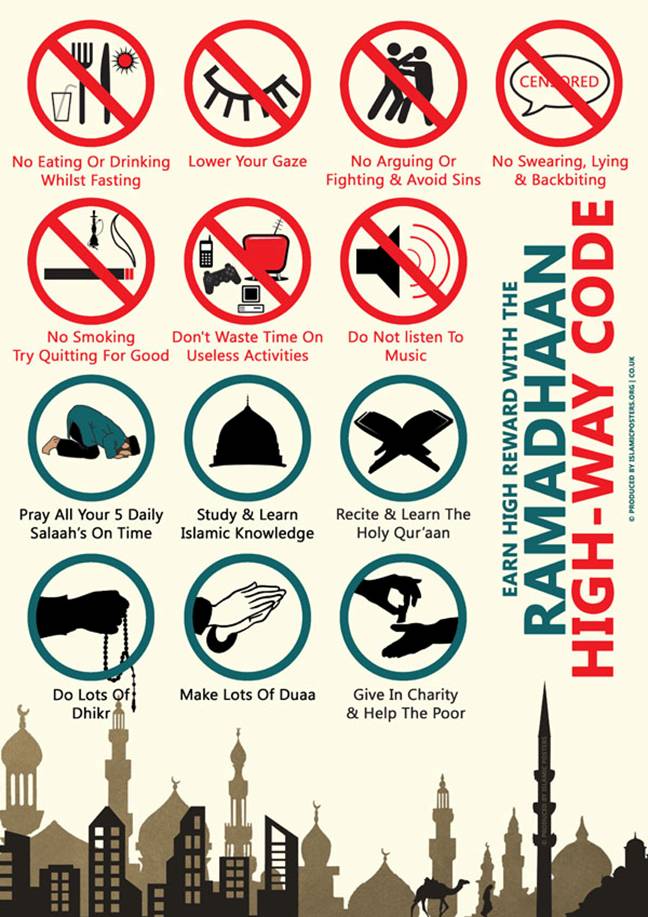
Ramazan Code for Your Home

Health Benefits of Lemons

Lemon is one of those super foods with a myriad health and cosmetic benefits. There are a few persons for whom it is an allergen, so make sure you are not allergic to this natural product, before you start enjoying the many benefits.

1. Lemon being a citrus fruit , fights against infection. It helps in production of WBC's and antibodies in blood which attacks the invading microorganism and prevents infection.

2. Lemon is an antioxidant which deactivates the free radicals preventing many dangerous diseases like stroke, cardiovascular diseases and cancers.

3. Lemon lowers blood pressure and increases the levels of HDL (good cholesterol).

4. Lemon is found to be anti-carcinogenic which lower the rates of colon, prostate, and breast cancer . They prevent faulty metabolism in the cell, which can predispose a cell to becoming carcinogenic. Also blocks the formation of nitrosamines in the gut.

5. Lemon juice is said to give a glow to the skin.

6. A few drops of lemon juice in hot water are believed to clear the digestive system and purify liver as well.

7. The skin of lemon dried under the sun and then ground to make powder can be applied to the hair for a few minutes before bath which relieves head ache and cools the body.

8. Applying lemon juice to acne dries the existing ones and prevents from getting more.

9. Lemon juice acts as a natural hair lightener and skin bleach which reduces the pigment melanin and prevents the risk of chemical allergic reactions which is common with hair dyes and bleaches.

10. Lemon juice is given to relieve gingivitis, stomatitis, and inflammation of the tongue.

11. Lemon juice is given to prevent common cold.

12. Lemon juice is given to prevent or treat urinary tract infection and gonorrhea.

13. Lemon juice is applied to the sites of bites and stings of certain insects to relieve its poison and pain.

14. Lemon juice relieves colic pain and gastric problems .

15. Lemon juice soothes the dry skin when applied with little glycerin.

16. Lemon juice used for marinating seafood or meat kills bacteria and other organisms present in them, thereby prevents many gastro-intestinal tract infections.

17. Lemon juice with a pinch of salt (warm) every morning lowers cholesterol levels and brings down your weight.

18. Lemon juice is the best drink to prevent dehydration and shock in case of diarrhea.

19. Lemon juice can also be used as a mouthwash. It removes plaque, whitens the teeth and strengthens the enamel.

20. A table spoon on thick lemon syrup everyday relieves asthma.

21. Lemon juice relieves chilblains and itchy skin.

22. Gargling lemon juice relieves throat infection and also used as a treatment for diphtheria.

23. Lemon juice is an excellent treatment for dandruff and greasy hair.

24. Lemon applied over the face removes wrinkles and keeps you young.

25. Lemon juice helps to prevent and cure osteoarthritis.

Health Tips: Safe Computer Use...

It is not uncommon for individuals to experience eye problems and discomfort such as headache, backache and fatigue from extensive computer use.

Many of the ill-effects of computer use can be lessened or avoided altogether by utilising correct typing technique and posture, ensuring correct set up of equipment and good work habits.

Place computer monitor and keyboard directly in front of you so as to avoid twisting your neck.

Monitor should be 20-24 inches away from eyes and the height of the monitor should be 5-15 inches below horizontal line of sight.

The mouse and keyboard should be at the same height.

Use an adjustable chair that provides firm, comfortable support. Adjust chair height so that thighs are horizontal, and feet are flat on the floor (use a footrest if necessary).

Do not slouch. Chair should be with a backrest for lumbar support.

Ensure that frequently used materials are within easy reach.

Block excessive sunlight with drapes or blinds and use indirect room lighting.

Give your eyes a rest every 15 to 20 minutes by focusing on a distant object for 10 to 15 seconds and blink often to prevent dry eyes.